
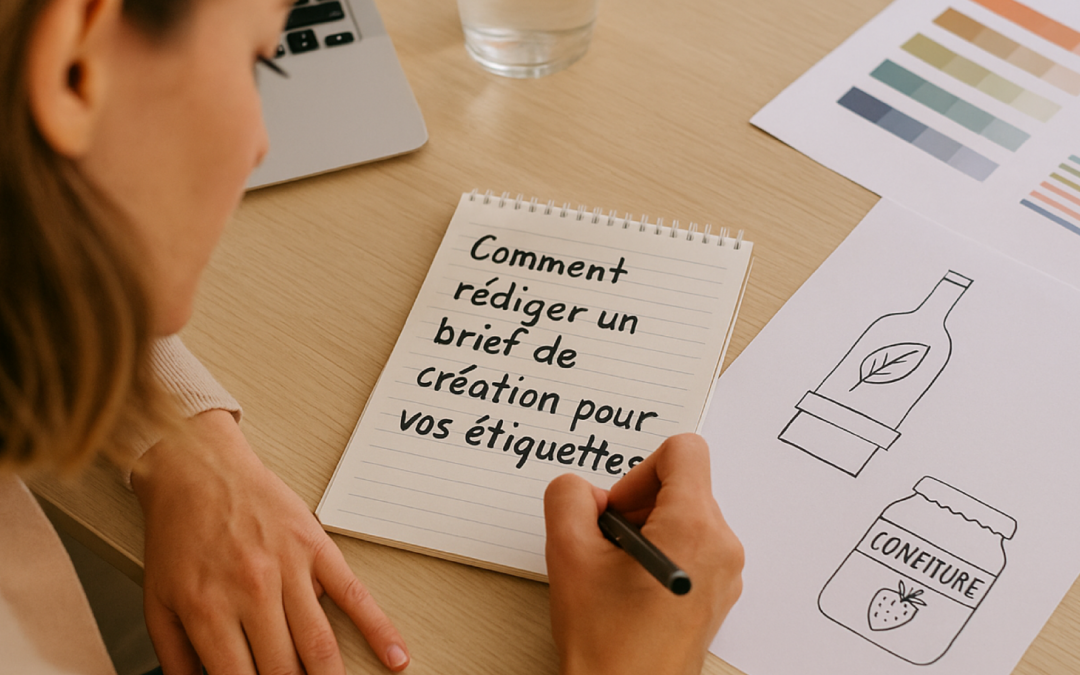
Every label begins with an idea… but for that idea to come to life, it must be communicated clearly. This is where the creative brief comes in. A true roadmap, it enables graphic designers to understand your expectations, your constraints, and your brand’s universe.
Whether you’re a winemaker, spirits creator, cosmetics artisan, or food industry player, writing a precise brief is essential for ensuring the final label is impactful, distinctive, and perfectly aligned with your identity.
In this article, discover why a creative brief is indispensable, what its key elements are, the mistakes to avoid, and how INESSENS supports you through this crucial stage.
What is a creative brief?
A creative brief is a document that brings together all the information necessary for the graphic design of a label. It describes the product, its universe, its objectives, as well as technical and regulatory constraints.
Its role is twofold:
- To guide the graphic designer so they understand your needs
- To establish a clear framework whilst leaving room for creativity
Without a brief, you risk obtaining a label that’s pretty but reflects neither your DNA nor your commercial ambitions. With a well-constructed brief, you maximise your chances of receiving a relevant and distinctive proposal from the very first draft.
Why is a creative brief indispensable?
A creative brief is not an administrative formality: it’s a strategic tool.
Here are its benefits:
- Save time: fewer back-and-forths, greater efficiency
- Align visions: everyone – client, graphic designer, printer – moves in the same direction
- Clarify objectives: to seduce, reassure, innovate, stand out
- Anticipate constraints: formats, materials, legal mentions, choice of printing techniques
👉 In summary, a well-constructed brief is the best guarantee of a final result faithful to your expectations.
The essential elements of a creative brief
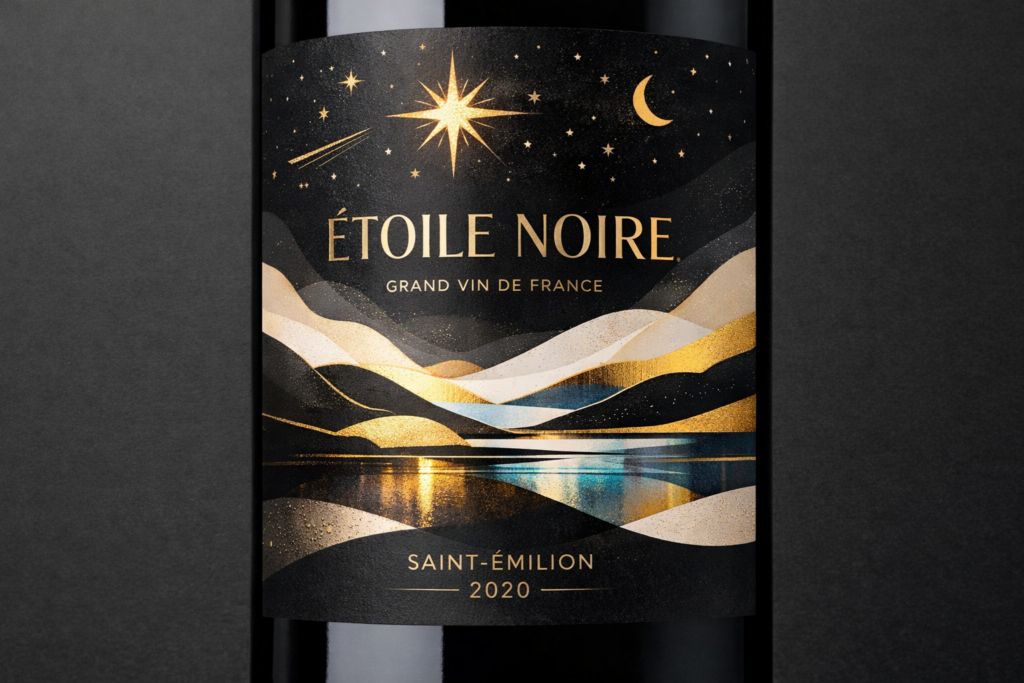
1. Brand identity
Before even discussing the product, it’s essential to remind people who you are:
- What is the history of your house or your business?
- What are your values (authenticity, innovation, tradition, sustainability…)?
- What tone do you wish to convey: premium, accessible, festive, confidential?
The graphic designer must understand your DNA to translate your visual identity into the label.
2. The product concerned
A wine label doesn’t have the same codes as cosmetic packaging. In your brief, specify:
- The product category (red wine, gin, olive oil, skin cream…)
- Its particularities (rare grape variety, artisanal recipe, organic ingredients, designation of origin, limited edition…)
- Its positioning (high-end, accessible, trendy, traditional)
3. The target audience
Who is this product aimed at? The answer directly influences the design.
- A vintage wine intended for connoisseurs won’t have the same label as a summer rosé destined for mass distribution
- A premium perfume will target emotion and refinement, whilst an organic fruit juice will focus on freshness and naturalness
The more defined your target, the more the label will be able to seduce them.
4. The label’s objectives
Ask yourself the question: what role should this label play?
- Catch the eye on a crowded shelf?
- Reassure about quality and tradition?
- Differentiate itself in a competitive universe?
- Create a sensory and emotional experience?
An effective brief clearly expresses this intention.
5. Technical constraints
A point too often neglected… yet essential!
- Format: Bordeaux bottle, cosmetic bottle, food jar
- Legal mentions: alcohol content, allergens, composition, origin…
- Supports & finishes: type of paper, gilding, embossing, selective varnish
These details help avoid beautiful ideas that are impossible to print or non-compliant.
6. Inspirations and references
The graphic designer isn’t in your head: inspire them!
- Provide a moodboard (photos, textures, colours, typography)
- Show labels you like… and those you absolutely want to avoid
- Explain what you like about these examples (sobriety, modernity, brilliance, naturalness)
This will provide clear creative direction without confining the artist.
Mistakes to avoid in a creative brief
A poorly conceived creative brief can slow down the project. Here are the pitfalls to avoid:
- Being too vague: “I want something pretty or modern” isn’t enough. It’s too subjective!
- Giving contradictory information (e.g., “sober but eye-catching”)
- Forgetting regulatory constraints, which can block production
- Not validating objectives with your teams before launching creation
A clear, concise, and coherent brief is always more effective than a document that’s too heavy or imprecise.
How INESSENS supports its clients in writing their creative brief
At INESSENS, we know that writing a brief can be intimidating. That’s why we support our clients step by step:
- Practical advice: we help you structure your ideas and formalise your needs
- Direct collaboration: we act as the link between you and partner graphic designers to facilitate communication
- Technical expertise: we anticipate printing constraints (papers, gilding, embossing, die-cutting) so that your wishes are achievable and impactful
Our objective: to transform your intentions into a label that enhances your product and makes a difference in the market.
Conclusion
A well-written creative brief is the first step towards a successful label. The more precise and inspiring it is, the more it allows graphic designers to unleash their creativity in service of your brand.
At INESSENS, we believe that every product deserves a unique label, capable of seducing at first glance and conveying the essence of your universe.
👉 Need help writing your creative brief?
Contact our team : we’ll be delighted to support you in transforming your ideas into an impactful and technically impeccable design.