
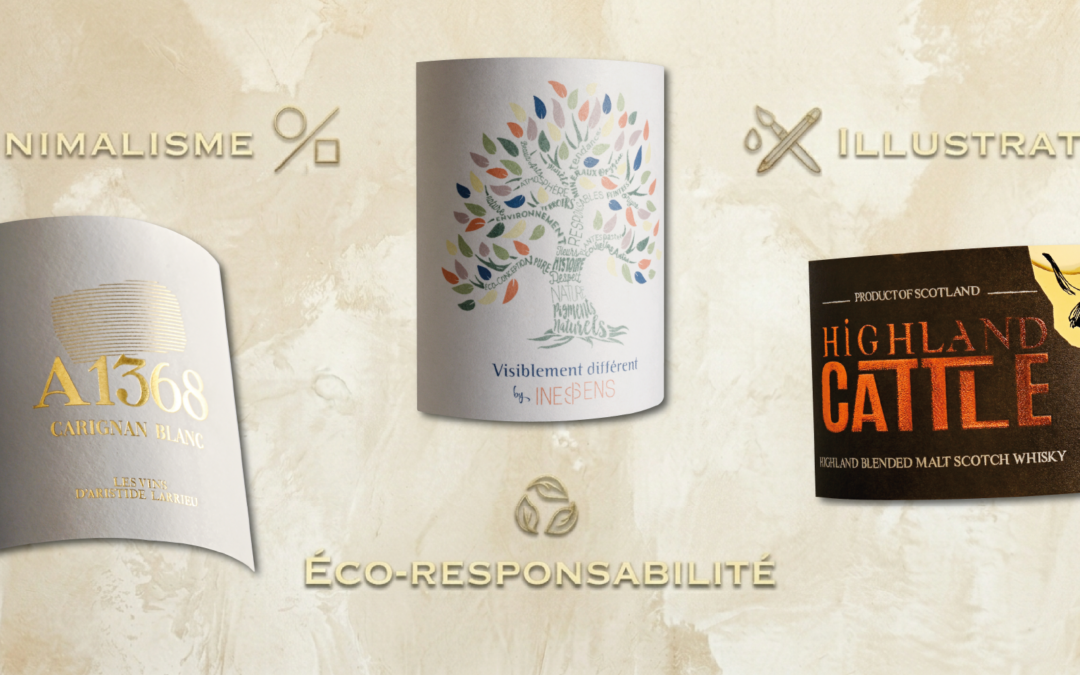
In a world saturated with choice, capturing attention within a matter of seconds has become a strategic necessity. And this is precisely where the label comes into its own. Far more than a mere identification medium, it has today become a powerful vehicle for values, storytelling and emotion.
In the wine, spirits, cosmetics and perfumery sectors, where perceived image is every bit as important as the quality of the product itself, the label has established itself as a visual language in its own right, one that is constantly evolving. An exploration of the trends transforming this small rectangle into a powerful tool for engagement.
Minimalist and sophisticated design
In a return to restraint, many brands are choosing to say more with less. Clean typography, a dominance of white or neutral tones, the removal of superfluous elements: minimalist elegance has asserted itself as a hallmark of quality. This trend, inspired by the codes of luxury, cuts across every sector. Certain premium wines such as the grand crus classés of Bordeaux or the most prestigious Burgundy crus opt for almost stripped-back labels that allow the materials themselves to speak. In perfumery, renowned houses employ minimalism as their core visual identity.
Sophistication, meanwhile, is found in the details: delicate embossing, textured papers, understated gilding, selective varnishes. Touch becomes as important as sight. These sensory techniques, used on everything from an artisan gin bottle to a jar of anti-ageing cream, lend the product a heightened perceived value and greater memorability.
Telling a story without words
At a time when consumers are seeking meaning, the label has become a condensed page of narrative. It is no longer simply the product being sold, but its story, its provenance, its makers. In wine and spirits, visuals draw on the world of illustration, antique engravings or dreamlike motifs to evoke a place, a tradition or an imaginary world. The bottle becomes a storytelling medium.
In natural cosmetics, brands celebrate botanical ingredients through hand-drawn illustrations, watercolours or references to the apothecary’s garden. As for certain perfume houses, they have no hesitation in collaborating with contemporary artists to give their flacons a strong and distinctive visual identity.
Environmental responsibility
Growing environmental awareness has profoundly changed the way labels are conceived. Eco-design, recycled materials, inks made from natural pigments, optimised material usage, washable adhesives: brands are rethinking their product packaging with durability firmly in mind.
This requirement is particularly evident in so-called “clean” cosmetics and ethical spirits. Certain brands are committed to responsible communication, where the label becomes a reflection of a broader commitment. Furthermore, the addition of QR codes allows printed information to be kept to a minimum whilst directing consumers to a digital platform covering traceability, ingredient origins and usage guidance.
Yet this approach presents a genuine challenge: reconciling premium aesthetics with the technical constraints of ecological production. Sustainable luxury is becoming a creative territory in its own right.
A crossover of worlds
It is striking to observe just how much these four sectors, which once seemed entirely impenetrable to one another, now influence each other in turn. Wine borrows from the codes of perfumery to project an air of elegance and mystery. Cosmetics draws inspiration from the language of terroir and fermentation, traditionally associated with wine. Certain spirits, such as Japanese whiskies or collector’s rums, adopt a design language reminiscent of niche perfumery.
This phenomenon is explained in part by the rise of cross-sector design agencies working across several of these industries simultaneously. They bring to each project a broad vision of visual trends and the emotional expectations of the modern consumer.
Inessens works closely with these agencies to support them in adopting the latest printing technologies and remaining at the forefront of innovation.
Conclusion
In just a few square centimetres, the label articulates deep-seated aspirations: transparency, naturalness, local roots, understated luxury, lasting commitment. It embodies the soul of a product just as surely as it catches the eye. In a fast-paced, image-driven world, it is more than ever the interface between a brand and its audience, between the promise and the experience.