
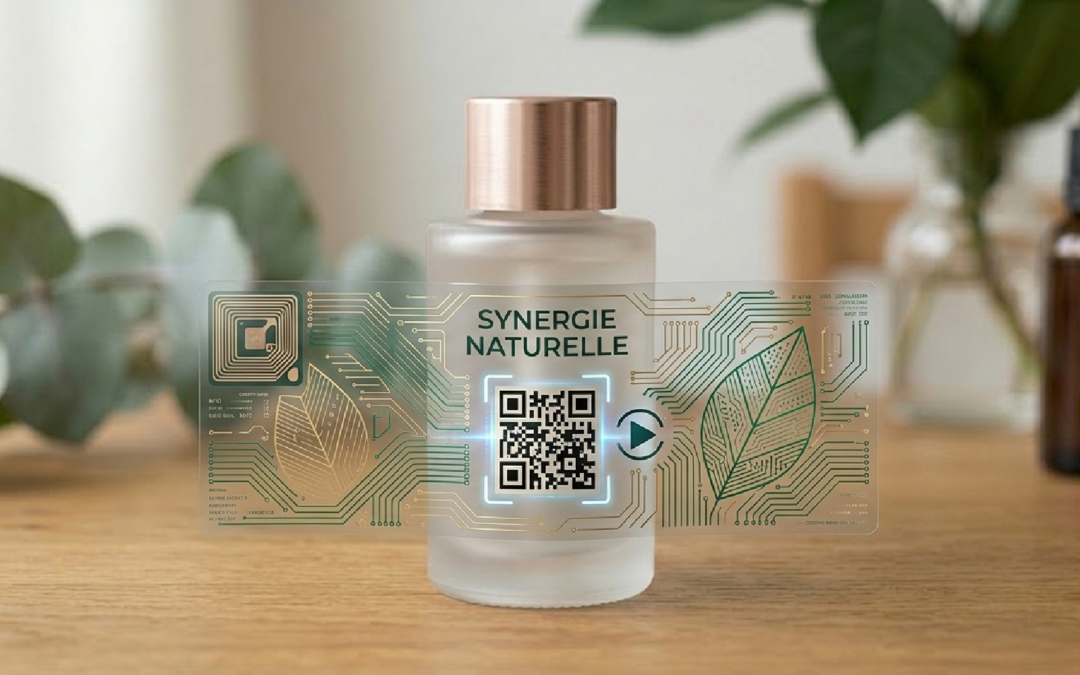
Historically, packaging had one primary function: to inform. Ingredients, origin, product name, legal notices… all indispensable elements to reassure consumers and guide their purchasing decisions.
Today, that role is evolving profoundly. With the rise of digital technology, packaging is becoming a hybrid medium, capable of combining information, emotion and interaction. QR codes, NFC, augmented reality: information is no longer confined to the printed surface : it extends into a rich, evolving and interactive digital world.
In this context, print is not disappearing. It is transforming, becoming the foundation of “augmented packaging”, a strategic lever for premium brands.
Print: an emotional and marketing lever
Packaging no longer simply informs; it immediately engages the senses, it must attract consumers and even foster their loyalty. In an environment saturated with information, the first point of contact remains physical. The consumer sees, touches, handles.
Through its visual and tactile design, shapes, colours, typography, printed finishes such as varnish, embossing or foil blocking : it catches the eye on shelf and becomes recognisable, encouraging repeat purchase.
This is where label design comes into its own. Printing and embellishment techniques make it possible to create a truly sensory experience. Tactile digital varnish, for example, adds relief and guides the finger across key elements, enhancing the perceived quality of the product.
Micro-creping, meanwhile, gives structure to smooth paper and creates subtle textural effects that invite the product to be picked up.
Foil effects also contribute to this visual and tactile appeal. A domed foil finish delivers exceptional relief and reinforces the premium perception of a label. A textured foil transforms the label into a piece of jewellery in its own right. Print is therefore more than a mere substrate: it is a vehicle for emotion, differentiation and memorability.
Digital: enriching information and extending the experience
Where print captures attention, digital extends the relationship. Thanks to connected technologies, packaging becomes interactive. A simple QR code can provide access to a wealth of content: presentation videos, brand storytelling, environmental information, tasting notes, usage tips…
Digital also adds an evolutionary dimension. Unlike static print, content can be updated, enriched or personalised in line with marketing campaigns. Finally, it opens the door to a deeper understanding of the customer. By analysing interactions, brands can refine their strategies and deliver ever more targeted experiences.
Print in the service of digitalised packaging
“Augmented packaging” is built on the union of the tangible and the digital. Print, labels, cartons, serves as the gateway to the digital world. The real challenge today is not to set print and digital in opposition, but to combine them intelligently. Augmented packaging rests precisely on this complementarity. The label becomes a point of entry into a digital universe.
Certain print innovations facilitate this hybridisation. Variable data printing, for example, makes it possible to create series of unique or personalised labels, strengthening engagement and a sense of collectability. Booklet labels also offer an interesting solution: they combine premium presentation with extended information space, whilst creating a direct link with the consumer.
Other approaches play on creativity and physical interaction. Partial adhesive, for example, introduces movement into the label, creating an effect that draws the eye and encourages the consumer to handle the product. Print thus becomes a genuine medium : it captures, it intrigues, it triggers interaction… And digital takes over to enrich the experience.
Connected printing technologies (QR codes, AR, RFID chips) create continuity between the physical and digital worlds. Scanning a code gives access to videos, environmental information, or the story behind the product. A cosmetics brand, for instance, might use printed packaging with a QR code linking to an online skin diagnostic or a personalised beauty tutorial.
Through this augmented experience, packaging that interacts with the consumer’s smartphone becomes truly immersive : a wine label that comes to life through an augmented reality application being one such example. Print, as a physical medium, remains the first sensory point of contact, and is therefore essential for creating emotion and desire. Digital, in turn, extends that experience: it invites discovery, sharing and engagement.
Personalisation, data and sustainability: the new challenges
One of the major contributions of digital is the ability to personalise the experience. Through data, digitalised packaging adapts to consumer preferences and can even personalise the product itself, making it unique in the eyes of the consumer. The connection between print and digital fosters a more immersive and participative relationship, contributing to greater consumer engagement and loyalty.
Randomised variable data, for example, can be used to create entirely unique labels, reinforcing a sense of exclusivity and collectability. This personalisation meets a strong consumer expectation, particularly in premium markets.
Furthermore, the link between print and digital opens up interesting perspectives in terms of sustainability. More restrained packaging can direct consumers to digital content, limiting the overloading of printed information in the interest of sustainability.
Rather than overloading a label with information, some brands opt for a clean design and point consumers towards digital content. This approach simultaneously limits over-printing, reduces environmental impact and preserves a premium aesthetic. Packaging thus becomes more responsible, whilst remaining rich in content.
In conclusion, print and digital are not in opposition: they complement one another to inform, attract and retain the consumer. Augmented packaging embodies this new alliance: an intelligent, aesthetically refined and connected printed medium, in the service of an enriched and sustainable brand experience. The former creates emotion, captures the eye and engages the senses. The latter extends the experience, enriches the information and strengthens the customer relationship.
This is precisely the vision that augmented packaging embodies: a label that is at once intelligent, aesthetically compelling and connected.
But this complementarity demands a high level of technical mastery. Combining embellishments, materials, variable data and digital devices requires a comprehensive skill set. This is precisely where a partner such as Inessens adds value: – in-depth knowledge of printing techniques – the ability to integrate tangible innovations – support that is both technical and creative
In a market where differentiation is key, packaging becomes far more than a substrate: it becomes an experience.